


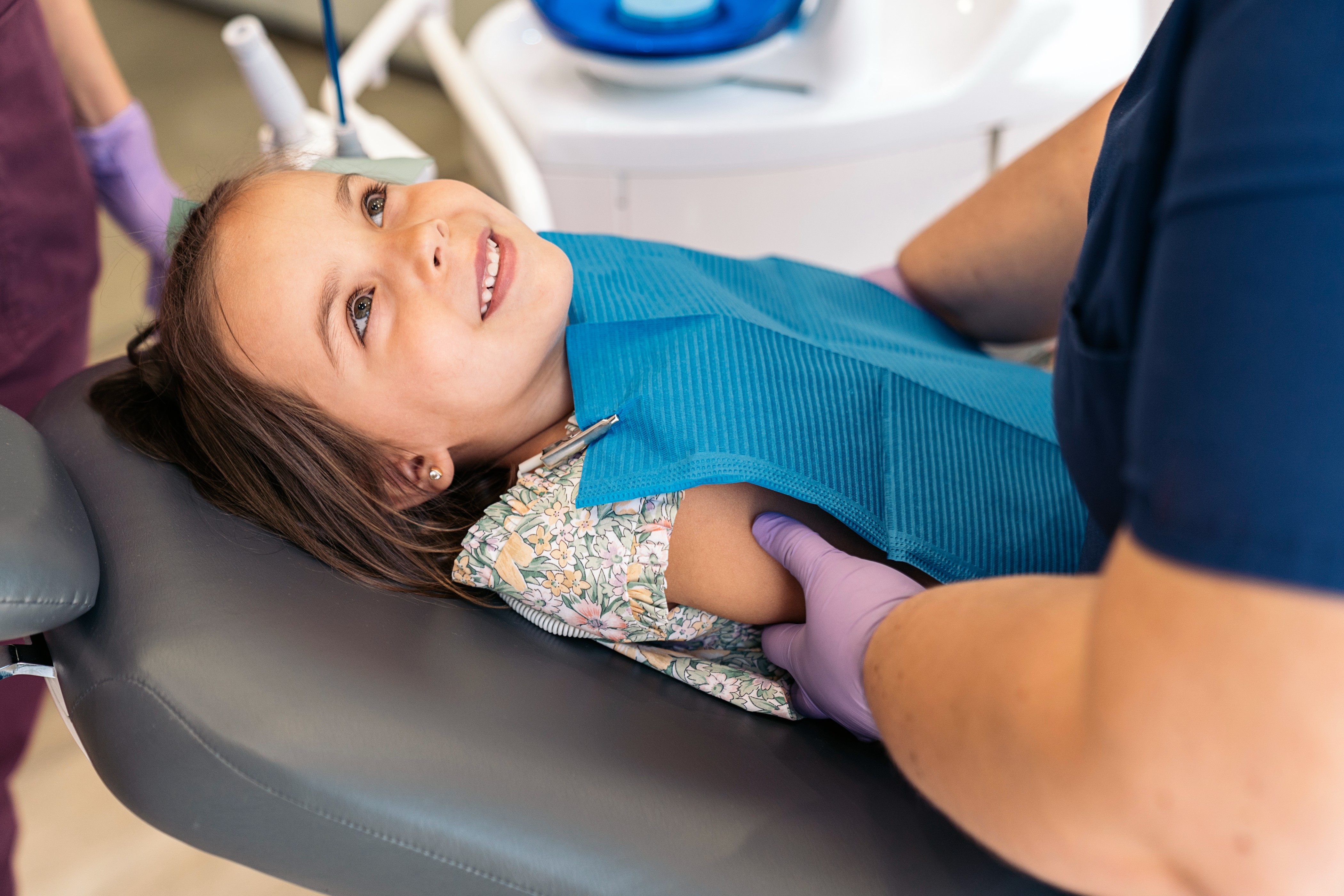
Quick answer: It is almost never too early for a first orthodontic check, but it can be too early to start treatment. The American Association of Orthodontists recommends that every child see an orthodontist by age 7. That visit is usually just a look, not a set of braces. Most kids who need treatment start later, between ages 10 and 14, once more adult teeth have come in.
If your child is 7 and their dentist mentioned braces, you are not behind, and you are not jumping the gun. Age 7 is exactly when a first orthodontic check is supposed to happen. Here is what that actually means for a Bakersfield family, so you can stop guessing.
Why Age 7?
By around age 7, most kids have a mix of baby teeth and adult teeth. That mix is what a Bakersfield orthodontist wants to see. It lets us spot how the jaw is growing, whether there is enough room for the adult teeth coming in, and whether the top and bottom teeth are lining up the way they should.
There is a reason this age works so well. The first adult molars and front teeth have usually come in by 7, which sets the back of the bite and gives us an early read on spacing. At the same time, your child is still growing fast, so if something does need guiding, we have years of natural growth to work with. Wait too long, and some of that growth is already spent.
Catching a problem at this stage does not mean your child gets braces at 7. Most of the time it means we take a look, make a few notes, and tell you to come back in a year or two. We have been checking Bakersfield kids at this age since the 1980s, and the honest truth is that the majority walk out of that first visit with nothing to do yet.
The Two Phases of Orthodontics, Explained
Orthodontists sometimes treat in two phases, and knowing the difference clears up a lot of confusion.
- Phase 1 is limited early treatment done while a child still has baby teeth, usually between ages 6 and 10. It targets one specific problem, like a narrow jaw or a bad crossbite, while the bones are still soft and easy to guide.
- Phase 2 is the full set of braces or aligners that straightens all the adult teeth, usually starting between ages 10 and 14.
Here is the part parents care about most: most kids skip Phase 1 entirely and go straight to a single round of treatment as a pre-teen or teen. Phase 1 is the exception, saved for cases where waiting would make the problem harder and more expensive to fix later.
When Early Treatment Actually Helps
There are specific situations where starting early genuinely prevents a bigger problem down the road. An orthodontist looks for:

- A crossbite that is pushing the jaw to grow crooked
- Severe crowding where adult teeth have no room to come in
- A top jaw and bottom jaw that are growing at very different rates
- Habits like long-term thumb sucking that are reshaping the bite
- Front teeth that stick out far enough to be at real risk of getting chipped in a fall or a sports hit
In these cases, a short round of early treatment can widen a narrow arch or steer the jaw while it is still growing, which is something we cannot do as easily once your child is a teenager. That early guidance can also make the second round shorter and simpler. When early work is not needed, though, waiting is the smarter and cheaper choice, and we will tell you so.
The First Visit Is a Look, Not a Commitment
Parents often put off that first appointment because they picture a kid leaving with a mouth full of metal. That is not how it works.
A first orthodontic visit at our downtown Bakersfield office is short and low-pressure. We look at your child’s teeth and jaw, sometimes take an image, and give you one of three answers:
- Everything looks great; no need to come back for a while.
- Things look fine for now; let’s watch it and check again in a year. This is the most common answer for a 7-year-old.
- There is something we should treat early, and here is why. This is the least common answer, and we only give it when acting now genuinely saves trouble later.
The initial consultation is free for new patients, so getting a real answer costs you nothing and commits you to nothing. Call our downtown office, and we will get your child in for a look.
Why “Let’s Watch It” Is a Real Plan, Not a Brush-off
If you hear “come back in a year,” that is not us stalling. Growth monitoring is one of the most useful things an orthodontist does. We track how your child’s jaw and teeth develop over time, and that record lets us start treatment at the exact right moment instead of guessing. Kids on a watch-and-wait plan come in for a quick check once or twice a year, and those short visits are how we catch the perfect window to begin. Starting at the right time often means less time in braces overall.
What if My Child Is Older Than 7?
You have not missed the window. Age 7 is the recommended time for a first check, not a deadline. Plenty of Bakersfield kids get their braces as teens between 10 and 14, and that is a perfectly normal timeline. If your child is older and has never seen an orthodontist, the best move is simply to book that first look now. Teeth respond to orthodontic treatment at any age, which is why adults straighten their smiles every day too.
Signs It Is Worth Booking a Visit
You do not need to wait for a dentist or a school screening to point it out. Consider a first orthodontic check if you notice the following:
- Teeth that are crowded, crooked, or overlapping
- A bite that looks off, where the top and bottom teeth do not meet cleanly
- Trouble chewing or biting
- Mouth breathing or long-term thumb or finger sucking
- Baby teeth that came out very early or very late
- Jaws that shift, stick, or make sounds
A Note on Timing Around the Bakersfield School Year
If treatment does turn out to be a yes, a lot of local families like to line up the first steps with summer or a long school break, when a couple of longer appointments are easier to fit in. Booking the initial exam early in the year gives you time to plan around soccer season, band, and finals rather than scrambling. There is no rush to start the day of the exam, so an early visit simply gives you options.
The Bakersfield Bottom Line
Too early to treat? Often, yes, and that is good news for your wallet. Too early to check? Almost never. A first visit around age 7 gives you a clear plan and takes the worry off your plate, whether the answer is “start now” or “check back next year.”
Toothworks of Bakersfield has straightened smiles downtown for more than 35 years. If you want a straight answer about your child’s teeth, we are happy to give you one.
Ready for a first look? New-patient consultations are free, with no obligation. Call (661) 323-9421 to book your child’s first orthodontic visit at our downtown Bakersfield office at H Street and 11th, just blocks from Mechanics Bank Arena.
Frequently Asked Questions
At what age should my child first see an orthodontist?
The American Association of Orthodontists recommends a first orthodontic check by age 7. At that age, most children have a mix of baby and adult teeth, which lets an orthodontist spot bite and spacing issues early. The visit is usually just an evaluation, not the start of braces.
Will my 7-year-old get braces at the first visit?
Usually not. Most 7-year-olds who come in for a first check are told to wait and come back for another look in a year or two. Braces most often start between ages 10 and 14, once more adult teeth have come in.
Is it ever too late to start orthodontic treatment?
No. Age 7 is the recommended time for a first check, not a cutoff. Teens and adults get orthodontic treatment successfully all the time. If your child is older than 7 and has never been seen, the best step is to book a first evaluation now.
How much does a first orthodontic visit cost in Bakersfield?
At Toothworks of Bakersfield, the initial orthodontic consultation is free for new patients. That visit gives you a real evaluation and a clear plan at no cost and with no obligation. Call (661) 323-9421 to book.
 My Teeth Shifted After Braces — Do I Need to Start Over?
